
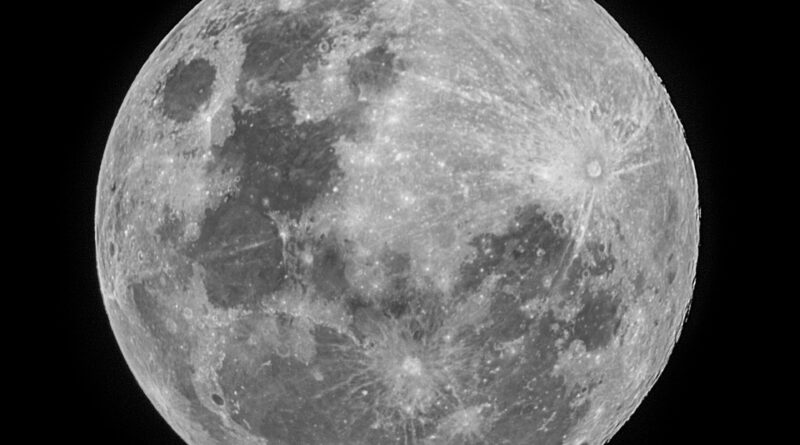
BOOM! Japanese Astronomer Catches Meteorite Smashing Into the Moon (Video)
Okay so this is genuinely one of the coolest things I’ve seen this month and I need everyone to stop what they’re doing and appreciate it.
A Japanese astronomer named Daichi Fujii just captured actual footage of a space rock slamming into the freaking moon. Like, in real time. From his house. In Japan.
The Moment of Impact
Fujii—who serves as curator of the Hiratsuka City Museum—had his cameras trained on the moon’s dark side on February 23rd when he captured what he describes as the biggest lunar impact flash in his observation history.
The timestamp reads 20:14:30.8 Japan Standard Time (thats 7:14 a.m. EST for us Americans still trying to figure out time zones). The meteorite apparently struck near Ideler L crater, which is slightly northwest of Pitiscus crater for any of you lunar geography nerds out there.
And honestly? The flash is WILD. It shines for more than a full second, which doesn’t sound like much until you realize we’re talking about an impact happening 238,900 miles away.
Why This Is Actually Insane
Heres the thing most people dont realize about the moon—it gets absolutely pummeled by space rocks constantly. Like, all the time. The difference between Earth and the moon is that we’ve got this nice thick atmosphere that burns up most meteors before they ever reach the ground.
The moon? No such luck. Its atmosphere is basically nonexistent.
That means when meteors come screaming in at around 30,000 mph—yes, thirty thousand miles per hour—theres nothing to slow them down. They just… smash directly into the surface. And every single one of those craters you see pocking the lunar landscape? Each one represents an impact like this.
The Science Part (Don’t Worry, I’ll Keep It Simple)
These meteors hitting the moon create what scientists call “lunar impact flashes.” The kinetic energy from traveling at absolutely bonkers speeds gets converted into heat and light the moment they hit the surface.
Fujii says the crater created by this impact could be around 39 feet in diameter. For perspective thats basically the width of a tennis court, created in literally less than a second by a rock probably smaller than a basketball.
NASA’s Lunar Reconnaissance Orbiter or India’s Chandrayaan 2 probe might eventually photograph this newly-formed crater, which would be pretty cool confirmation of the whole thing.
Why Scientists Actually Care About This
Beyond the obvious “wow cool explosion” factor, capturing these impacts has real scientific value. Astronomers study these events to understand how frequently the moon gets hit, which matters a LOT now that multiple countries are planning to send humans back there.
NASA’s Artemis program aims to put astronauts on the lunar surface in the coming years. Knowing how often the moon gets bombarded by space rocks—and how big those rocks typically are—is kind of essential information for anyone planning to hang out up there.
Its also worth noting that investments in space technology continue ramping up globally as both government agencies and private companies eye the moon for everything from scientific research to resource extraction.
The Amateur Astronomy Flex
Can we also just appreciate that Fujii captured this from his house? Using cameras he set up himself specifically to monitor the moon?
This is the kind of citizen science that makes the internet age genuinely amazing. A guy in Japan, watching the moon on his own time, catches a once-in-a-lifetime event and shares it with the entire world within hours.
Fujii has been doing this for years, patiently recording the moon night after night. Most of that footage is probably pretty boring—just the moon sitting there being the moon. But then one night, a rock hurtling through space for possibly millions of years finally reaches its destination, and he captures the exact moment of impact.
That’s pretty poetic when you think about it.
Final Thoughts
The universe is violent in ways our smooth-brained human minds can barely comprehend. Rocks fly through the void at incomprehensible speeds. Moons get cratered like they owe someone money. And occasionally, a patient astronomer with a camera catches the whole thing on film.
Space is absolutely metal, and I refuse to apologize for being excited about it.
For more science and tech coverage that actually makes sense, stick with ReportDoor.